



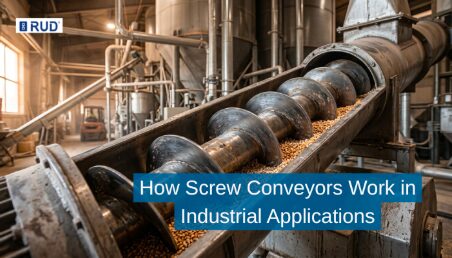
A screw conveyor is a mechanical device used to move bulk materials from one point to another. It works by using a rotating helical blade (or screw) inside a trough or tube to steadily transport the material along its length. The mechanism is simple, but configuration determines whether the system runs smoothly for years or develops jams, wear, and material damage.
In fact, the same basic design can handle a wide range of materials, including dry grain, wet sludge, fine cement powder, and wood chips. But each material behaves differently inside the system, which means the conveyor setup needs to match the application.
With more than 40 years of experience in conveying systems across mining, agriculture, and manufacturing, RUD Australia has seen these differences first-hand. This guide draws on that experience. It covers:
- What a screw conveyor is and how the mechanism works
- The main components and what each one does
- How configuration affects performance
- Where screw conveyors are used
Let’s get into it.
What Is a Screw Conveyor and How It Works
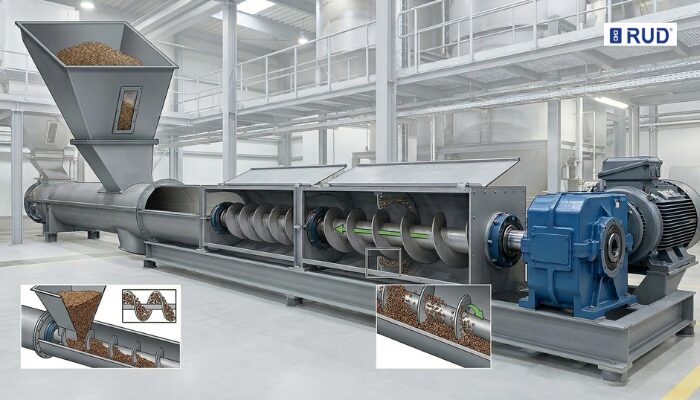
As we already mentioned, a screw conveyor consists of a rotating screw inside a fixed trough or tube. As the screw rotates, the helical blade pushes material along the length of the trough toward the discharge point. The speed of that rotation, combined with the blade’s pitch and diameter, controls how much material moves and how fast.
That simplicity is also why the concept has survived for more than 2,000 years. Historians trace the screw conveyor (also known as Archimedes’ screw) back to around 250 BC, when it was used to lift water for irrigation.
The core concept hasn’t changed much since then. What evolved is the engineering behind it, including tighter manufacturing tolerances, stronger materials, and more advanced drive systems. Today’s screw conveyor systems are far more reliable and adaptable across a much wider range of industrial applications.
Main Parts of a Screw Conveyor System
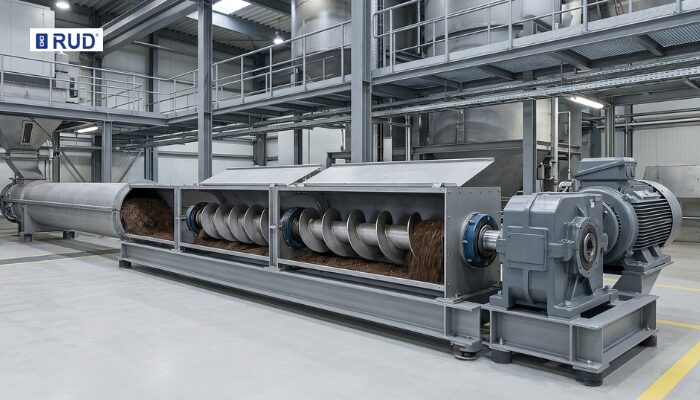
A screw conveyor consists of three core components: the screw flight, the trough, and the drive unit. Each one has a specific job, and together they keep material moving consistently through the system. So we break down each one below.
The Screw Flight and Trough
The screw flight is the helical blade wrapped around the central shaft that moves material through the conveyor. Its performance depends on factors such as pitch, thickness, and flight profile.
A flight designed for grain, for example, won’t move abrasive or sticky materials efficiently. Those materials require a different geometry to reduce buildup, control wear, and maintain consistent flow.
The trough also plays an important role in material movement. It surrounds the screw and guides material along the conveyor length. Because of this, most troughs are enclosed to help contain dust and prevent spillage during operation. In food processing and pharmaceutical environments, that level of containment is a regulatory requirement.
Drive Unit and Bearings
You can’t run a screw conveyor without the drive unit. It pairs an electric motor with a gearbox to control how fast the screw shaft rotates. And that speed has to match the material you’re moving. If you run it too fast, the material tumbles instead of flowing cleanly, which can lead to spillage and uneven discharge.
The rotating shaft also needs consistent support throughout operation. That’s why engineers fit bearings at both ends of the conveyor to keep the system aligned and stable while running. On longer units, designers add intermediate bearings along the shaft to prevent flex and maintain consistent performance across the full length of the system.
How Screw Conveyors Move Bulk Materials
Material moves through a screw conveyor through two forces working together: the pushing action of the rotating flight and the pull of gravity. Think of it like a corkscrew pushing through a cork, except the material moves along the barrel instead.
Three factors determine how well that works in practice:
- Configuration: Screw conveyors operate in horizontal, inclined, and vertical orientations. Horizontal systems suit flat transport with lower energy use. For moderate elevation changes, inclined conveyors work well but require careful pitch selection to prevent rollback. Vertical conveyors move material straight up and rely on precise screw design to maintain consistent flow.
- Flight Design: The flight profile controls how materials move through the conveyor. For free-flowing materials such as grain or powder, a standard helical flight is usually sufficient. But when handling abrasive, wet, or cohesive materials, you’ll need a modified profile to reduce wear and prevent buildup along the trough.
- Material Behaviour: Fine powders, coarse aggregates, and sticky materials all behave differently inside a bulk handling system. Mismatching the screw speed or flight type to the material leads to premature wear and unplanned downtime (something we see often in the field).
When all three factors work together, the system runs consistently and components last significantly longer. In fact, based on our experience, sites that get the specification right from the start typically see maintenance intervals extend by 2 to 3 years compared to those that don’t. If you’re unsure where your current setup stands, that’s usually the first thing worth reviewing.
Industrial Uses of Screw Conveyor Systems
Screw conveyors are used across mining, agriculture, food processing, construction, and chemical production. And very few bulk handling systems cover that much ground.
Here’s where they’re most commonly found:
- Mining and Resources: Screw conveyors handle demanding materials such as mineral ores, coal, and abrasive aggregates. Their enclosed design helps reduce spillage while maintaining consistent throughput.
- Agriculture: Grain handling remains one of the most common applications for screw conveyor systems. They move grain, animal feed, and fertiliser efficiently through storage and processing facilities with minimal product damage.
- Food and Pharmaceutical Processing: Hygiene and contamination control are non-negotiable in these industries. Screw conveyors meet those requirements by fully enclosing powders, granules, and bulk ingredients throughout the entire transport process.
- Construction and Waste Management: Screw conveyors handle wet, sticky, and difficult materials that many other conveyor systems struggle to move. That makes them particularly useful in waste management applications. On construction sites, this same conveying principle reliably moves cement, sand, and lime between processes
As industries continue looking for reliable, lower-maintenance bulk handling solutions, screw conveyors remain one of the most adaptable options. They’re especially effective in applications where enclosed transport and consistent throughput are priorities.
What to Consider Before Choosing a Screw Conveyor System
Before choosing a screw conveyor system, there are several factors to work through, such as material properties, conveyor length, incline, and wear resistance.
The first thing to assess is the material you’re moving. Its moisture content, abrasiveness, and flow characteristics all influence the system design. If you specify a bulk handling system around the wrong material properties, it will face challenges from day one, regardless of build quality.
Conveyor length and incline angle come next. These determine the screw diameter, pitch, and motor capacity needed to move your material reliably across the site. Getting those calculations wrong leads to an underpowered system that struggles to maintain consistent throughput.
Wear resistance is another factor worth assessing early. Abrasive materials wear down standard components faster than most operators expect, so specifying the right materials and coatings for your application upfront is often more effective than replacing parts after installation.
Worth Noting: For sites with specific safety or compliance requirements, your equipment selection should align with AS/NZS 4024:2019, the Australian standard for machinery safety. The right expertise at the specification stage ensures the system is built for your site conditions from the beginning
Is a Screw Conveyor Right for Your Operation?
It depends on what you’re moving and how. For most bulk material handling applications, screw conveyors are a reliable and well-proven choice. But choosing the wrong configuration leads to blockages, premature wear, and throughput issues.
Most of these issues come down to specification. When material properties, conveyor orientation, and wear conditions are properly accounted for upfront, the system performs consistently with minimal intervention.If you’re at the specification stage or reviewing an existing setup, RUD Australia can help. We’ve worked with industrial sites across Australia for over 40 years and will match the system to the application and operating conditions.